
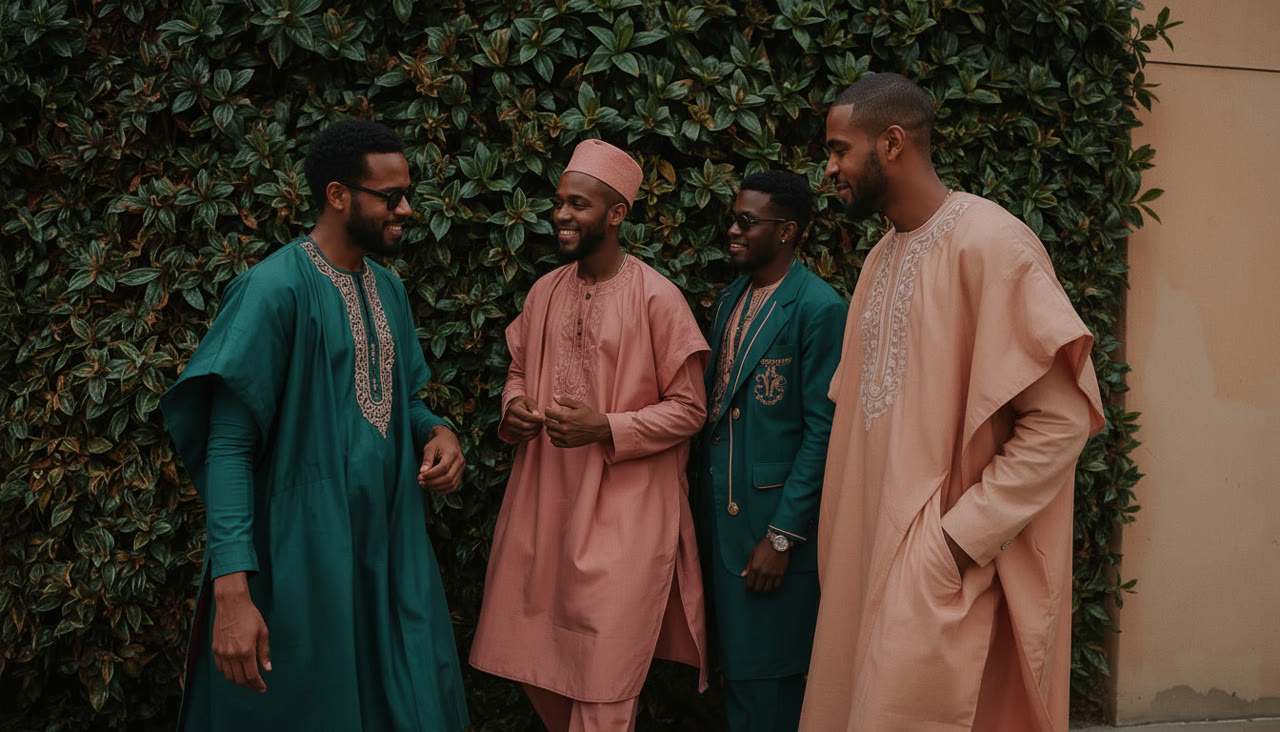
Aso Ẹbi Ideas for Men: Agbada, Buba and Sokoto
Compare agbada, buba and sokoto, and modern tailored sets, then choose a look that fits the fabric, the occasion, and the person wearing it.
How dressed-up should the group be?
Men’s aso ẹbi can range from full agbada to a simpler buba and sokoto or a modern tailored set. The right choice depends on each person’s role, the fabric, the weather, and how much moving around the day will involve.
Everyone does not need the same amount of embroidery or volume. The groom or senior family members might wear agbada while the rest of the group shares the same buba and sokoto color. Decide those differences early so they look intentional.
Think about what each person will actually do in the outfit. Carrying children, greeting guests, driving, praying, dancing, and moving through crowded spaces all affect the sleeves, robe length, pockets, and shoes.
- Role
- Decide what the groom, family, friends, and younger attendants will wear.
- Weather
- Balance lining and structure with the heat and length of the event.
- Movement
- Test walking, stairs, sitting, sleeves, and handling the outer robe.
- Details
- Connect the embroidery, fila, shoes, watch, or jewelry without using everything at once.
Agbada: plan for the volume
Agbada will usually be the biggest silhouette in the group. Talk through the width, length, sleeves, neckline, embroidery, and the clothes underneath as one complete outfit. More fabric does not automatically mean a better result.
Ask how the cloth will sit on the shoulder, where the embroidery will land, and whether the robe can be gathered easily for walking and sitting. If you are moving between venues, decide how it will be carried, stored, and refreshed.
Heavier cloth can hold its shape but may feel hot and tiring after several hours. Lighter cloth is easier to move in but may need extra care to keep the robe from looking flat. Let the tailor handle the actual fabric before confirming the cut.
Buba and sokoto: simple still needs a good fit
A buba and sokoto set can look polished without the volume of agbada. Check the tunic length, shoulders, sleeve opening, trouser rise, and where the trousers meet the shoes. These small details stand out more in a simple outfit.
For the group, use the same base cloth and allow small differences in the neckline embroidery, pockets, or fila. If some men add agbada, keep the inner set color consistent so the group still looks connected after the robes come off.
Confirm whether the trousers use a drawstring, elastic, zipper, or another adjustable fastening. Sit and walk during the fitting, then check the tunic from the side and back.
Modern tailored sets
A structured kaftan-style tunic, collarless jacket, or clean two-piece set can use the group colors without the volume of agbada. The fit needs to be precise, so keep the extra details simple.
Choose one thing that connects the group: the main fabric, contrast placket, embroidery thread, pocket square, or cap. One clear link usually looks better than several small motifs added everywhere.
If some men are wearing traditional outfits and others are wearing suits, connect them through color and finish. For example, a suit can repeat the group color in a pocket square, shirt, or small fabric panel.
Check the fabric weight and embroidery
Embroidery can change how the neckline or front of the outfit hangs. Agree on the size, thread shine, placement, and backing before the work begins. On patterned fabric, a quieter embroidery color may work better than another competing design.
Check the back of the embroidery for roughness and ask whether it needs a soft facing. Dense work around the neck and chest can also hold heat, especially during a long event.
Do not copy the yardage from someone else’s outfit. Height, shoulders, robe and sleeve width, fabric width, pattern matching, pockets, fila, and the tailor’s cutting method can all change how much is needed.
Fila, shoes, and accessories
The fila can match the main fabric, add the group’s accent color, or mark a special role. Choose the height, fold, direction, and stiffness with the person’s face and outfit in mind. Try it on with glasses before the event.
Bring the event shoes to the final fitting. Even a small change in shoe height affects the trouser length and how far the agbada sits from the floor. Test the shoes on smooth floors, outdoor ground, and stairs.
A watch, chain, cufflinks, ring, walking stick, or beaded piece can finish the outfit, but they do not all need to be worn together.
Connect the men’s outfits to the rest of the group
Write down what everyone shares and what can vary. For example: everyone wears deep green buba and sokoto; agbada is optional for senior family; embroidery stays close to the fabric color; fila uses the gold accent; shoes are dark leather.
That one clear rule is easier to follow than a group chat full of unrelated inspiration photos. It also gives every tailor the same target without forcing each man into the exact same outfit.
Women’s and men’s looks can share colors in different amounts. The women’s gele might carry the same gold used in the men’s embroidery, while the men’s main fabric repeats the women’s wrapper color.
Questions to ask the tailor
- Will this fabric hold the agbada or tunic shape I want?
- Which measurements do you need, in which units, and over what clothing?
- How wide and long will the robe and sleeves be?
- Where will the embroidery sit once the outfit is on the body?
- How will the trousers fasten, and can the waist be adjusted?
- Where will the pockets be, and what can they carry?
- Should the fila use the same fabric, and who will shape it?
- Which shoes should I bring to the fitting?
- When are the first fitting, corrections, and collection?
What to check at the final fitting
- Raise both arms and make sure the neckline stays in place.
- Sit down and stand up without having to rearrange every layer.
- Walk at your normal pace and try the stairs.
- Check the trouser length with the event shoes.
- Put on the fila, glasses, jewelry, and outer robe together.
- Look at the outfit in daylight and indoor light.
- Ask how to hang, fold, steam, and transport each piece.
Give everyone one place to check the plan
asemble keeps the fabric, group choices, measurements, payment instructions, and deadlines together. Each guest sees what applies to them, and the host can see who has finished.
How this guide was prepared
The asemble editorial team reviewed museum records for textile and garment context. We then wrote the fitting questions around the choices a wearer and tailor need to make together. The hero image shows one contemporary coordination direction; it is an editorial illustration, not a photograph of a specific wedding or a rule for what every group should wear.
References
- Smithsonian National Museum of African Art: Man’s garments, a record of a Yoruba robe, tunic, trousers, cap, cloth, and embroidery.
- Victoria and Albert Museum: Cloth of a continent, including aṣọ-òkè construction and use.
Image credit
Hero image generated for asemble in Leonardo AI using Lucid Realism, with a targeted Nano Banana refinement. Selected, cropped, and optimized for responsive display.
Corrections or source questions: hello@asemble.app.