
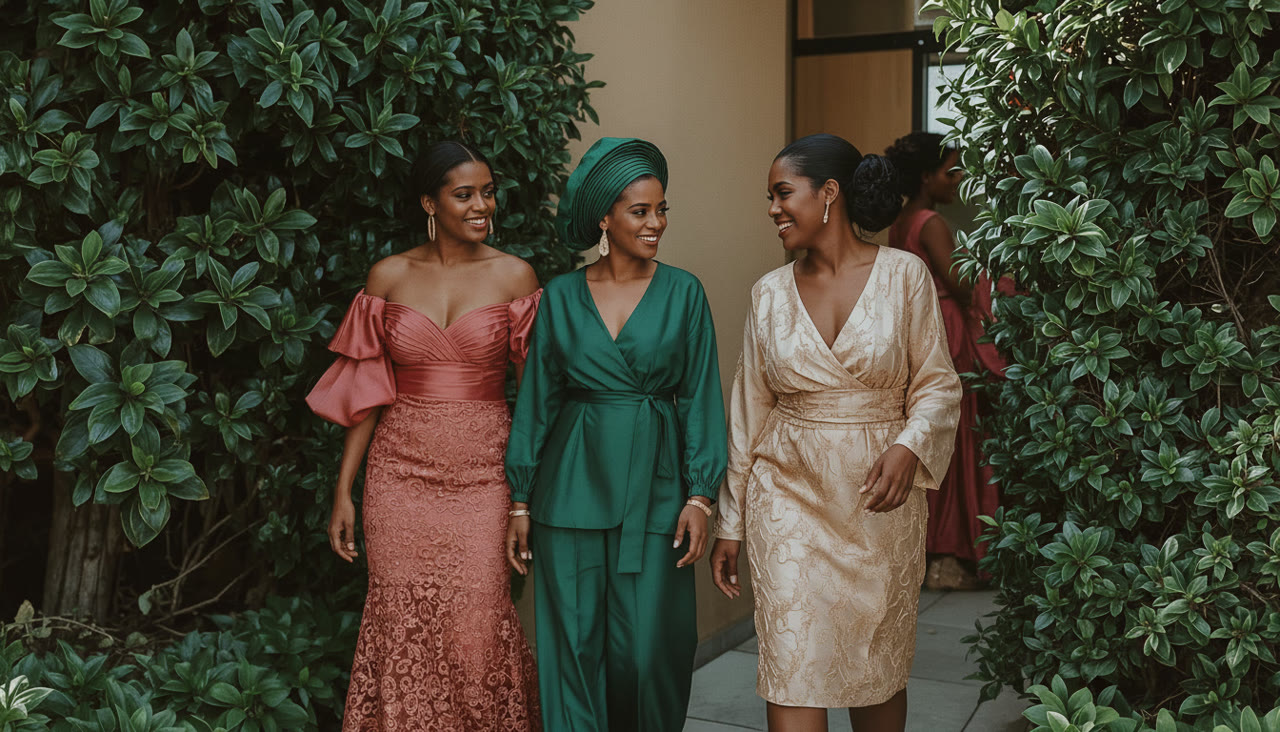
Aso Ẹbi Ideas for Women: Gowns, Iro and Buba
Compare gowns, iro and buba, wrappers, and gele, then choose a look that works with your fabric and stays comfortable through the event.
Before you choose a style, check the fabric
A saved photo can show you a neckline or sleeve, but it cannot tell you whether your fabric will drape, stand, stretch, itch, shine, or hold embroidery. Bring the fabric, or a full-width swatch, to the tailor before you settle on the design.
Think past the first photo. Can you sit through the ceremony, lift your arms, get into a car, use the stairs, eat, and dance comfortably? The outfit needs to work for the whole event, not only while you are standing still.
If everyone is using the same fabric, the outfits can still feel personal. Change the sleeve, neckline, wrapper, or gele while keeping the shared fabric or colors easy to recognize.
- Movement
- Sit, reach, walk, and dance during the fitting.
- Support
- Decide undergarments before the final bodice fit.
- Heat
- Ask where lining, boning, and layers are truly needed.
- Finish
- Check seams, closures, hems, and headwear attachment.
Gowns: choose one feature to make the statement
A gown can be fitted and simple or full with sculpted sleeves. Pick one feature to lead, such as the sleeve, neckline, train, peplum, or fabric pattern. When every detail is oversized, the wearer and the fabric can get lost.
Fitted or column gown
This works best when the fabric can hold a clean seam and you can still sit and walk comfortably. Ask about the vent, lining, zipper, and hem before the final fitting.
Flared or mermaid shape
The point where the skirt begins to flare controls how easily you can move. Test sitting and taking normal steps before the tailor finishes it. If the fabric has a large pattern, check where it lands at the hip, knee, and seams.
Full or gathered gown
A fuller skirt can show off a lighter print, but it also adds heat, weight, and fabric. Ask how the skirt will be supported and how you will transport it before adding more volume.
Iro and buba: get the proportions right
With an iro wrapper and buba blouse, small changes make a big difference. Decide how high the wrapper should sit, how long the blouse should fall, and how much room the sleeves need for movement.
If the fabric has a border or a pattern that runs in one direction, mark which edge should show. Ask the tailor or dresser to demonstrate how to wrap and secure it so you can manage it yourself.
A matching ipele or shoulder cloth can pick up the color of the gele or wrapper. Plan it with the outfit rather than adding it at the last minute.
Wrapper and blouse combinations
A wrapper-and-blouse look works well for a group because each woman can adjust the neckline, sleeves, and fit while still wearing the shared colors. The blouse can use the group fabric with a plain wrapper, or the wrapper can carry the print instead.
When you combine two materials, look at them together in the same light. Check the undertone and shine. A cool silver lace and a warm gray wrapper may clash even if both were sold under the same color name.
For a group with different ages and preferences, set the fabric and color, then let each person choose the coverage and fit that feels right. The repeated material will connect the group without forcing everyone into the same blouse.
Plan the gele with the rest of the outfit
Think about the gele alongside the neckline, sleeves, glasses, earrings, and venue. A wide sculptural gele needs room. A smaller tie may work better when the gown or blouse already has a lot of volume.
Confirm who will tie it, how long you need to wear it, and whether the material is included. Bring your glasses to the appointment, turn your head, and agree on where pins can be placed safely. If several women are getting dressed together, label each piece and allow enough time.
Accessories should finish the look, not compete with it. Repeating one metal, bead, coral, or bag color is usually enough.
Make the colors work in photos too
The outfits do not need to match exactly. Repeat the colors in different places so the group still looks connected.
- Light and dark
- Spread the darkest color across the group instead of putting it on only one person.
- Print scale
- Keep accessories simpler with a large print. Add one stronger accent when the fabric is more subtle.
- Shiny fabric
- Test sequins, satin, metallic thread, and other reflective materials in daylight and with flash.
- Near the face
- Let each woman adjust the color near her face through gele, jewelry, or makeup.
Questions to ask your tailor
- Will this fabric work for the sleeve, bodice, and skirt I want?
- Which measurements do you need, in which units, and how should each one be taken?
- Where will the garment need lining or structure?
- Will I be able to sit, eat, and dance comfortably?
- Where will the pattern or border meet at the seams?
- Which undergarments and shoes should I bring to the fitting?
- What can still be changed at the first fitting?
- When are the first fitting, corrections, and final collection?
Do not rely on a universal yardage chart. Ask the person cutting the garment after they have seen the design, measurements, fabric width, pattern, lining, and any matching gele or wrapper.
Make sure you can wear it for the whole event
Tell the tailor about pregnancy, nursing, mobility, sensory sensitivity, heat, religious coverage, scars, medical devices, or footwear needs that affect the outfit. It is easier to plan for them before the fabric is cut.
Options might include adjustable closures, discreet elastic, extra seam allowance, a detachable train or sleeve, a smaller gele, or a change of shoes. If the event lasts all day, consider whether you need a simpler version of the outfit for dancing or travel.
At the final fitting, use the restroom, sit for several minutes, raise both arms, and walk at your normal pace. Take photos from the front, side, and back so you and the tailor can check the balance and hem.
Give everyone one place to check the details
With asemble, guests can find the fabric, colors, measurements, and deadline without asking the host to resend the same messages. The host can see who has finished and who still needs a reminder.
How this guide was prepared
The asemble editorial team reviewed museum textile records for cultural and fabric context. We then wrote the fitting questions around the choices a wearer and tailor need to make together. Always confirm the design, fabric amount, and measurements with the tailor who will make the outfit.
References
- Victoria and Albert Museum: Cloth of a continent, including a buba, iro, ipele, and gele ensemble and an overview of aṣọ-òkè.
- British Museum: Yoruba wrap-around garment, an object record describing strip-woven construction.
Image credit
Hero image generated for asemble in Leonardo AI using Lucid Realism, with a targeted Nano Banana refinement. Selected, cropped, and optimized for responsive display.
Corrections or source questions: hello@asemble.app.